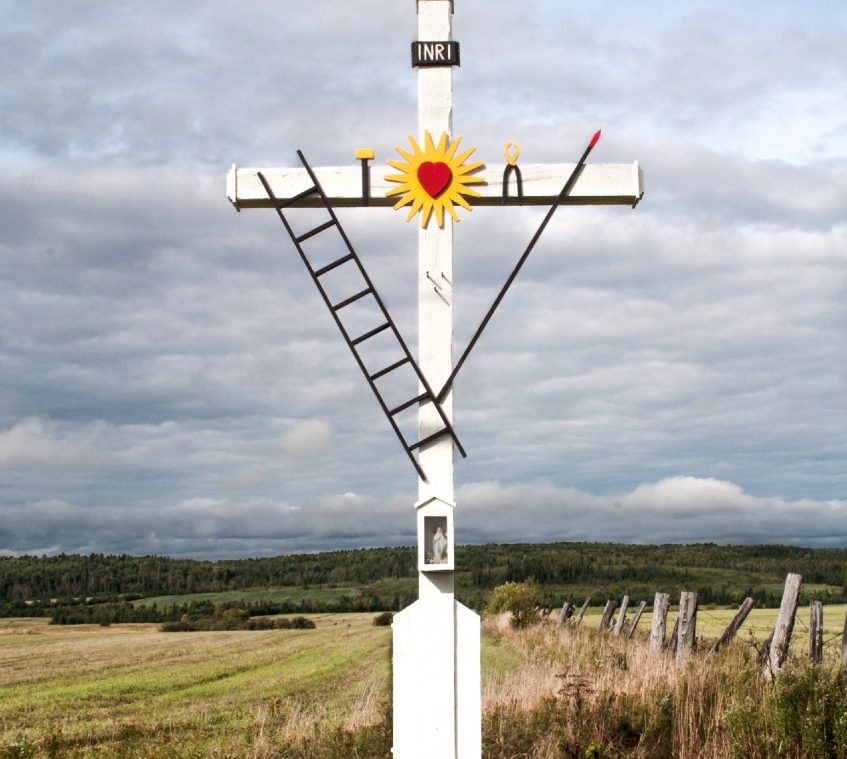
St-Bruno-de-Guigues Wayside Cross
croix de chemin avec instruments de la passion
Year : 2016
Photo credit : Christine Brézina
St. Bruno-de-Guigues Wayside Cross
In almost every municipality of Témiscamingue, you can still find at least one wayside cross today. There are about thirty of them in our region. In addition to the crosses placed on the roadside, others are installed on mountains or in public places such as at Fort-Témiscamingue or in the courtyards of private properties. A niche on the shaft of the cross is quite common. Some crosses rest on a pedestal and are surrounded by a white wooden fence.
Behind each wayside cross, there is a purpose:
- Commemorative Cross: It reminds people of a specific event site.
- Foundation Cross: It symbolizes the establishment of human settlement on new land.
- Public Devotion Cross: This is the traditional wayside cross, a gathering place for people.
- Votive Cross: It represents a specific vow or favor. People plant or erect this type of cross to request or thank for a favor granted.
Wayside crosses can be classified into three models:
- Simple Wayside Cross: Consisting of a post and beam with occasional decorative elements at the ends.
- Passion Instruments Cross: The beam typically features symbolic objects related to the Passion of Christ, such as the lance, sponge, hammer, nails, crown of thorns, etc.
- Calvary: Representing Christ on the cross, sometimes with a small structure on top. The Virgin Mary and the apostle John can occasionally be found at the foot of the cross. This type of cross is mainly found in cemeteries.
Did you know that there are eight different wayside crosses documented in the Témiscamingue territory? Discover them all.


